Altobel Antonio, since 1968
Since 1968 we have been making pendulum clocks by hand in Sanguinetto, in the province of Verona, halfway between Milan and Venice. Since 1969 we have shipped them all over the world.
The workshop
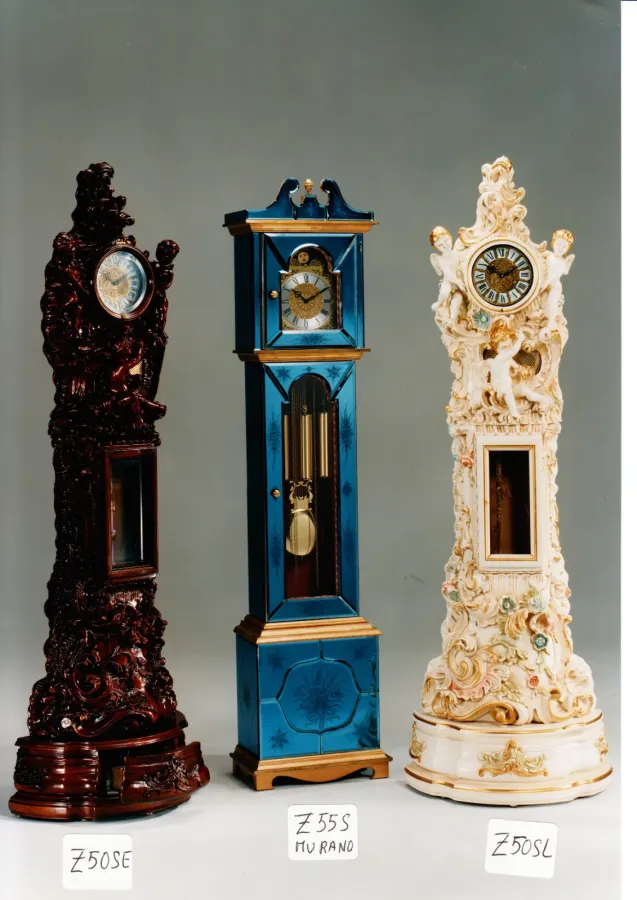
We are a family business and we follow every step ourselves, in person: we choose the wood, work it, sand and polish it, assemble the clock, test it, pack it and ship it. We use old techniques and simple machinery, as it has always been done: hand carving, inlay in polychrome woods, polyester finish and Venetian lacquer.
Since 1984 we have combined wood, glass and wrought iron with new materials: aluminium, steel, carbon fibre, marble and granite powder. Since 1989 we have reused all our production offcuts and bought raw materials only from certified suppliers. Many models have bevelled glass, tempered or shatterproof.
In the workshop we keep finished clocks, ready for delivery, and unfinished ones, to be finished the way you like.
Milestones
- 1947Antonio Altobel is born in Sanguinetto, in the province of Verona.
- 1968After military service he opens the workshop below the family home, with his parents: custom furniture and interiors for Switzerland and the United States.
- 1969The first exports begin. Customers ask for a pendulum clock to complete their interiors: the first Westminster chimes signed Altobel are born.
- 1984Aluminium, steel, carbon fibre, marble and granite powder join the wood: the contemporary line is born.
- 1989All production offcuts are reused, and raw materials come only from certified suppliers.
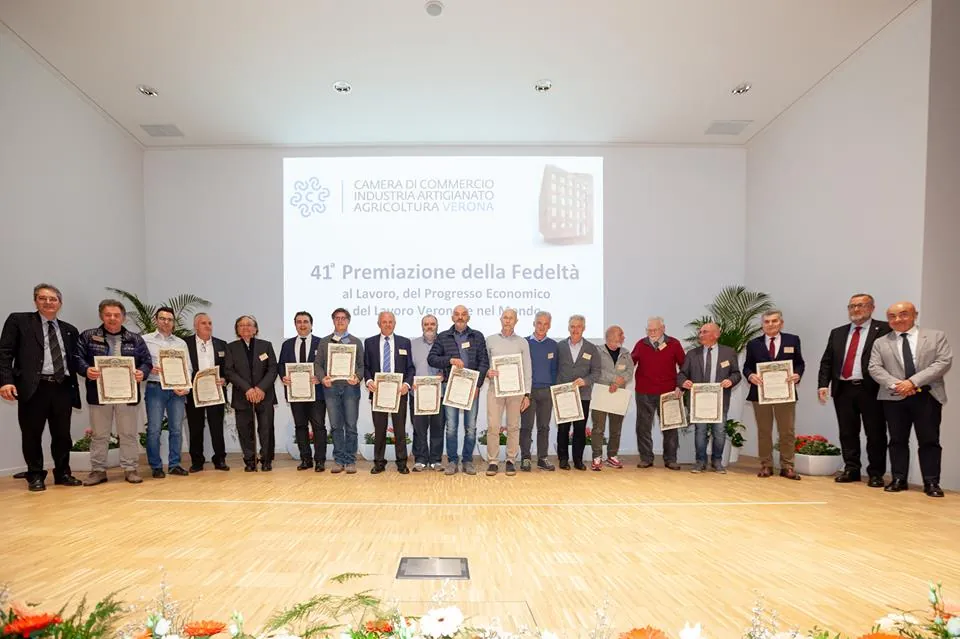
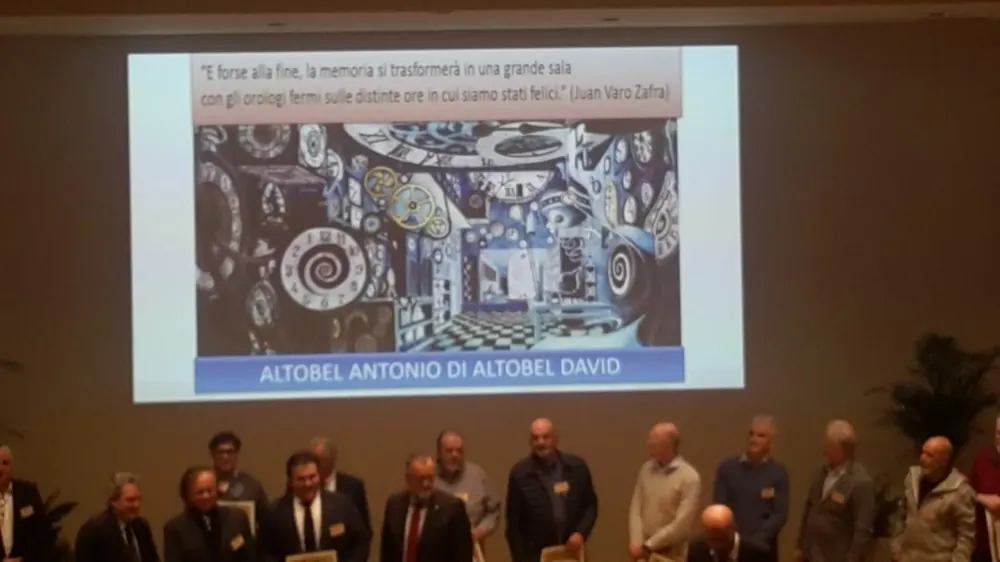
- 2019The Verona Chamber of Commerce honours Antonio and his son David for fifty years in business, an award given to only three Verona craft firms each year.
- TodayPendulum, wall, table and design clocks, shipped all over the world. Antonio still looks after repairs in person.
The founder, Antonio Altobel
Antonio was born in Sanguinetto in November 1947. At the age of six he started as an apprentice in a small workshop where everything was done by hand: he soon learned to take apart old furniture salvaged from house moves and renovations, and to build new pieces from the same wood and the same fish glue.
In 1968, after military service, he opened his own workshop below the family home, alongside his parents: custom furniture and interiors, exported across Europe, above all to Switzerland, and to the United States. For a few years he worked in French-speaking Switzerland, first on site and then persuading his clients to come all the way to Sanguinetto.
It was those clients who asked him to complete their interiors with a pendulum clock. He began with the Westminster chime and, little by little, widened the range to wall, table and design clocks. Today they are in private homes, government buildings, churches, conference halls and galleries all over the world.
Once they were mostly gifts for a wedding, a retirement or an anniversary. Today they are pieces people long for, for the home or the office, and they pass from one generation to the next.
The 2019 award
In February 2019 the Verona Chamber of Commerce honoured Antonio and his son David for fifty years in business. Read the article about the award.

How they are built
All our clocks open fully, at the front or by lifting the top, like the English originals of the eighteenth century. This lets us finish them properly inside and out, and the movement sits in a single removable unit, with hands, dial and sometimes the bells.
If a spare part is ever needed, the unit can be replaced anywhere in the world by undoing the two grey screws that hold it at the bottom. The full warranty lasts two years, and spare parts for the movement remain available for ten: warranty and shipping.
We fit only original German Kieninger mechanical movements, made in the Black Forest since 1912: mirror-polished plates, a self-centring pendulum, power reserve and, on many models, a seconds hand, moon phase, lyre pendulum and night silencer, which keeps the chime quiet from 10 pm to 7:15 am. The hands can also be turned backwards.
Every clock leaves in a double cardboard box with inner protection, together with an instruction booklet in 17 languages.
Around the world
For many years our clocks have gone to private homes, politicians, parliaments, churches, films and television, in Italy and abroad.