Tap a photo to enlarge it
SMR.77
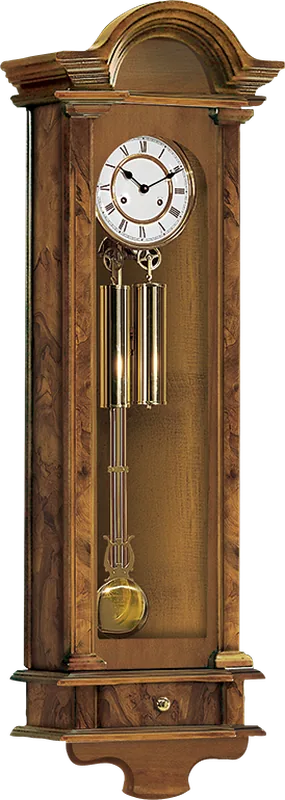
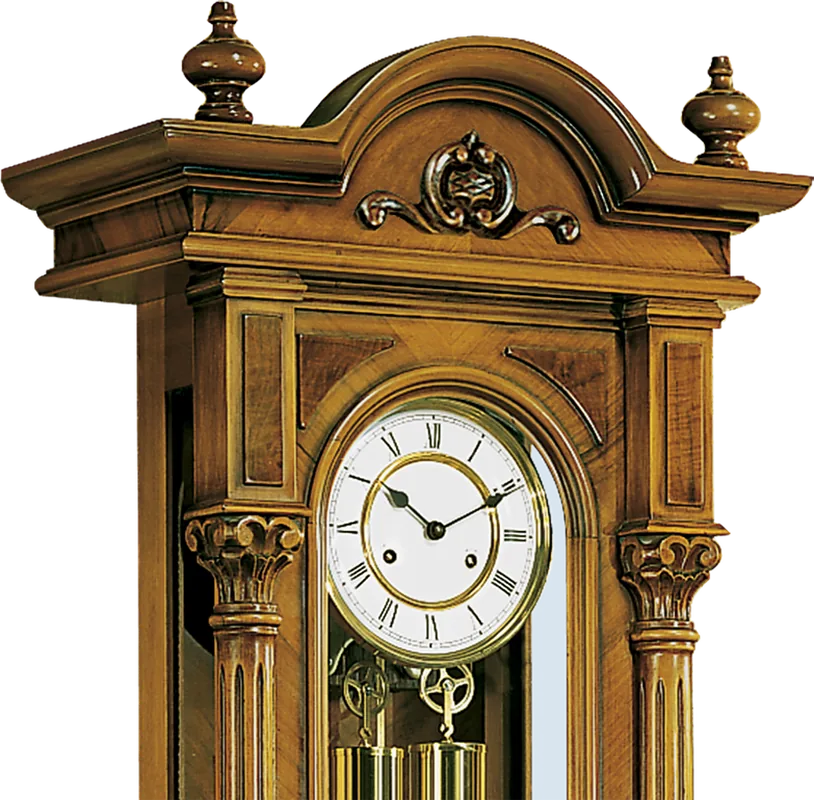
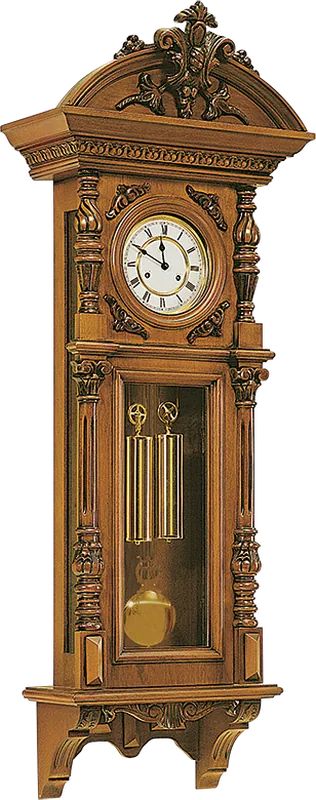
Wooden wall clock
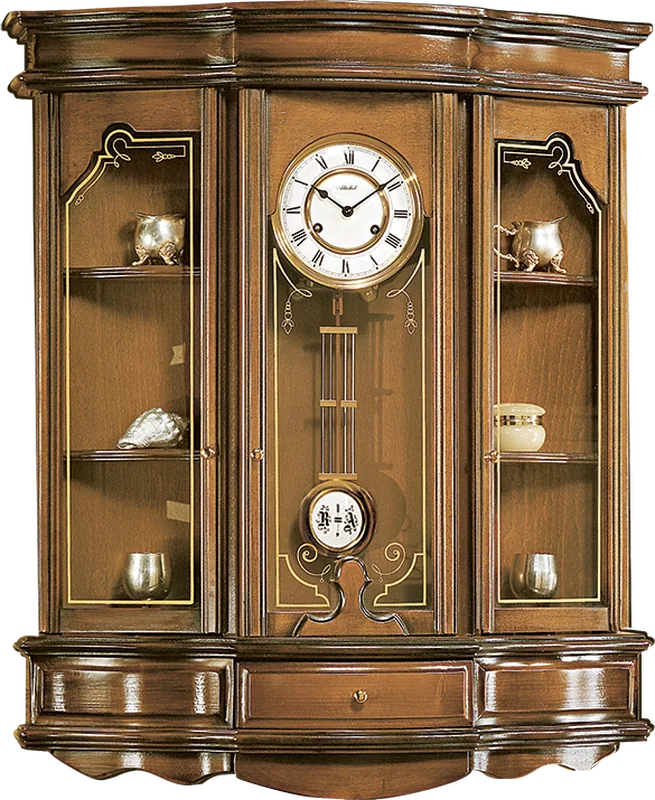
A wall clock that is also a small curio cabinet. The glass, decorated with gold flowers on the little doors and on the pendulum door, gives it a simple, delicate charm.
A clock that is yours alone. Wood, finish, colour and melody: we start from this model and finish it together, the way you want it.
- Dimensions
- Height 76 cm · width 63 cm · depth 19 cm · weight 20 kg
- Wood
- Beech and American tulipwood; Tanganyika details and back
- Finish
- Semi-gloss medium walnut, inside and out
- Movement
- German Hermle mechanical movement in brass, spring-driven; weekly key winding in the 2 dial holes; turn the hands clockwise only
- Chime
- One stroke at the half hour, hours struck on a large spiral gong; to silence it, wind only the right-hand spring
- Dial
- Round and domed, with double brass ring and black Roman numerals on white
- Pendulum
- Hermle pendulum with R/A regulation; white pendulum scale
- Other
- Three doors and a small drawer; 4 wooden shelves in the side cabinets; thin glass screen-printed in gold by hand; 4 corner spacers
How it is made
This model comes from central Italy. The case is beech and American tulipwood, with Tanganyika details and back. It has three doors and a small drawer in the centre; the side cabinets hold four wooden shelves, for small objects and keepsakes.
The case is made of thirty small parts: we finish them separately and put them back together before fitting the movement. Stefano applies the semi-gloss medium walnut finish, inside and out. The glass is thin and slides in from the top; Giovanni Casella screen-prints it by hand in gold, as in the 1930s, with flowers in a Belle Époque spirit. Four spacers at the corners keep the case from marking the wall.
The movement is by the German firm Hermle, making clocks in the Black Forest since 1920. At the half hour it gives one stroke; on the hour it strikes the hours on a large spiral gong made specially for our oversized wall clocks, with a soft, light sound. It is wound once a week with the key in the two dial holes; if you would rather not hear the strike, wind only the right-hand spring. The Hermle pendulum is marked R/A: turn the nut to the right and the bob rises, so the clock gains; turn it to the left and it loses.