Tap a photo to enlarge it
SMR.90
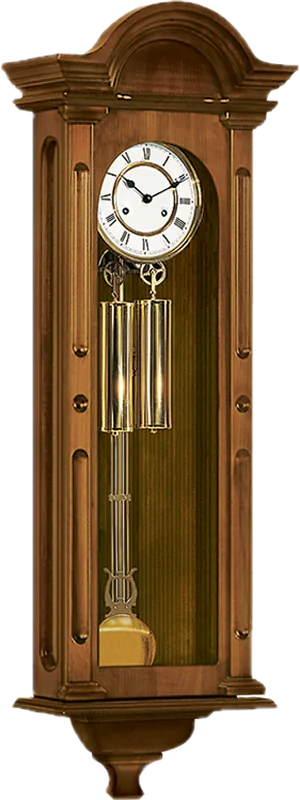
Wooden wall clock
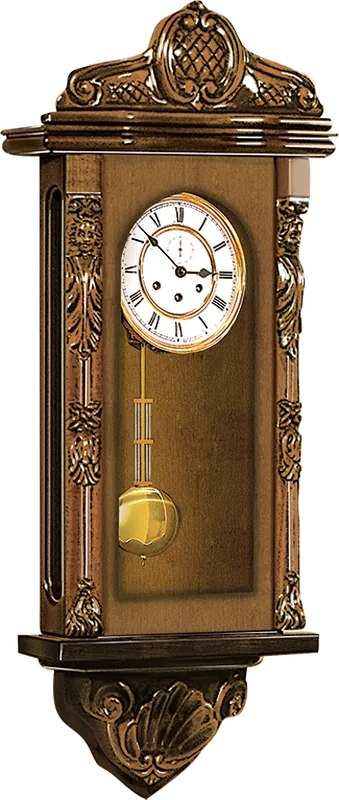
Small but complete: blown glass, oval side glass, carvings above, below and beside the door, the Westminster chime and a seconds hand.
A clock that is yours alone. Wood, finish, colour and melody: we start from this model and finish it together, the way you want it.
- Dimensions
- Height 99 cm · width 39 cm · depth 18 cm
- Wood
- Solid American tulipwood, up to 14 cm thick in the base; plywood back veneered in Tanganyika
- Finish
- Semi-gloss medium walnut, inside and out
- Movement
- German Hermle mechanical movement in brass, spring-driven; weekly key winding in the 3 dial holes; turn the hands clockwise only
- Chime
- Westminster every quarter hour and the hours struck, on copper-coloured bells; lever to silence it completely
- Dial
- Round, white and flat, by the German firm Jaeckle, with seconds hand
- Pendulum
- Grid-style pendulum in thick solid brass; white pendulum scale
- Other
- Two carved figures beside the door; blown glass and two oval side glasses; door on a continuous hinge; 4 corner spacers
How it is made
The case is carefully selected solid American tulipwood, up to 14 cm thick in the base. Franco carves and finishes it by hand, with the two figures set at 45° beside the door that separate the upper and lower case. The back is plywood veneered in Tanganyika and keeps the structure steady, even hanging on the wall.
The door has clear blown glass by Giovanni Casella, and the two oval side glasses let light inside. Stefano applies the semi-gloss medium walnut finish, inside and out. The door hangs on a continuous hinge, and four spacers at the corners keep the case from marking the wall.
The movement is by the German firm Hermle, making clocks in the Black Forest since 1920. We first mount it on a support together with the copper-coloured bells, handsome to look at and with a fine sound. It plays the Westminster chime of Big Ben in London every quarter hour and strikes the hours; a lever silences it completely. It is wound once a week with the key in the three dial holes.