Tap a photo to enlarge it
SZR.73
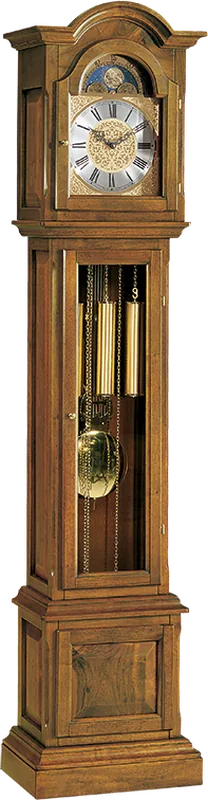
Grandfather clock
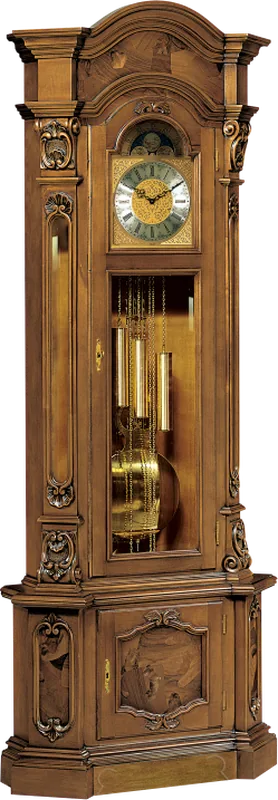
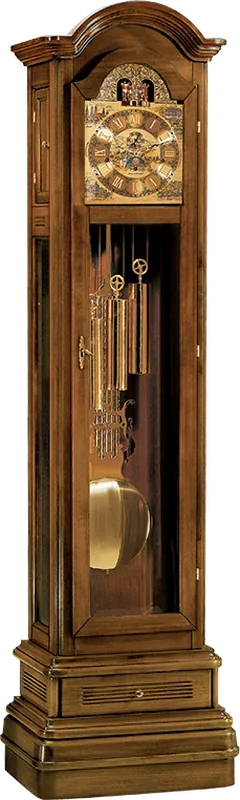
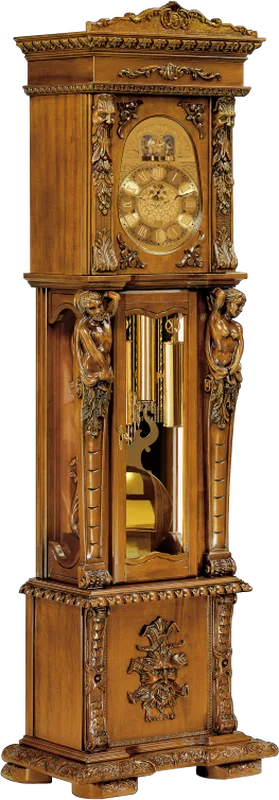
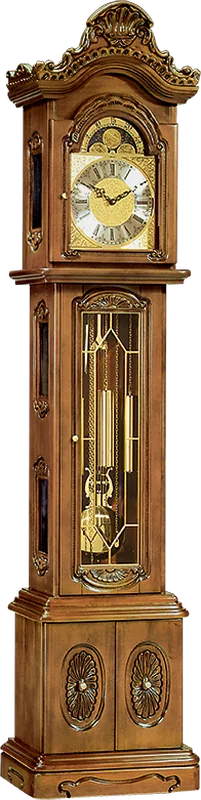
The Venetian longcase clock par excellence, all in genuine solid Italian walnut from the Naples area. Diamond-cut raised panels on the front and sides, plain brass hinges and half-almond mouldings around the glass.
A clock that is yours alone. Wood, finish, colour and melody: we start from this model and finish it together, the way you want it.
- Dimensions
- Height 207 cm · width 48 cm · depth 28 cm · weight 70 kg
- Wood
- Solid Italian walnut from the Naples area, in 110 pieces; diamond-cut raised panels on the front and sides
- Finish
- Evens out the grain and lightens the darker parts a little; light antiquing and signs of age
- Movement
- German Kieninger mechanical movement in brass; weekly chain winding (up to 10 days); switchable night silencer from 10 pm to 7:15 am
- Chime
- Westminster every quarter hour
- Dial
- Moon phase dial by the German firm Jaeckle; can be lightly aged
- Pendulum
- Brass lyre pendulum and brass weights by Jaeckle; can be lightly aged
- Other
- “Arte povera” work; plain brass hinges; half-almond mouldings and half-moon work around glass and doors; wide arch on the door; 5 mm hand-bevelled glass, fixed with strips and screws
How it is made
We have made it since the 1970s, but it looks back to the Veneto of the early 1800s, between Bolzano and Rovigo and between Verona, Trieste and Udine. It follows the Venetian “arte povera” tradition, in solid Italian walnut chosen with great care. Real walnut often moves a great deal: this is why we work the solid wood in separate pieces, with loose diamond-cut panels, and assemble it only after polishing, so any shrinkage will never show.
A half-moon moulding runs around the glass and the doors, and each of the 110 pieces of wood that make it up has its own margin to move. The finish evens out and harmonises the grain and lightens the darker parts a little; then we add light antiquing and signs of age, to give the clock a lived-in, warm feel. The 5 mm glass is bevelled by hand on every edge by master glazier Giovanni Casella, and we fix it with strips and screws, as tradition has it.
We gave the door a very wide arch to show off the moon phase: in the past, between one inn and the next and one change of horses and the next, it told travellers when they could ride at night by the light of the moon. The dial, weights and pendulum can be lightly aged too, with a paint that dulls the metal and leaves a little darkness in the corners. The Kieninger movement plays the Westminster chime every quarter hour, can stay silent at night and is wound once a week by pulling the chains.